Two CFTC nominees treated a sports contract as a question for the courts.
Anonick's statement never mentions event contracts. Rowland's names them as a growth market and promises states and tribes an open door. Chairman Selig is still the only name on the commission's list.
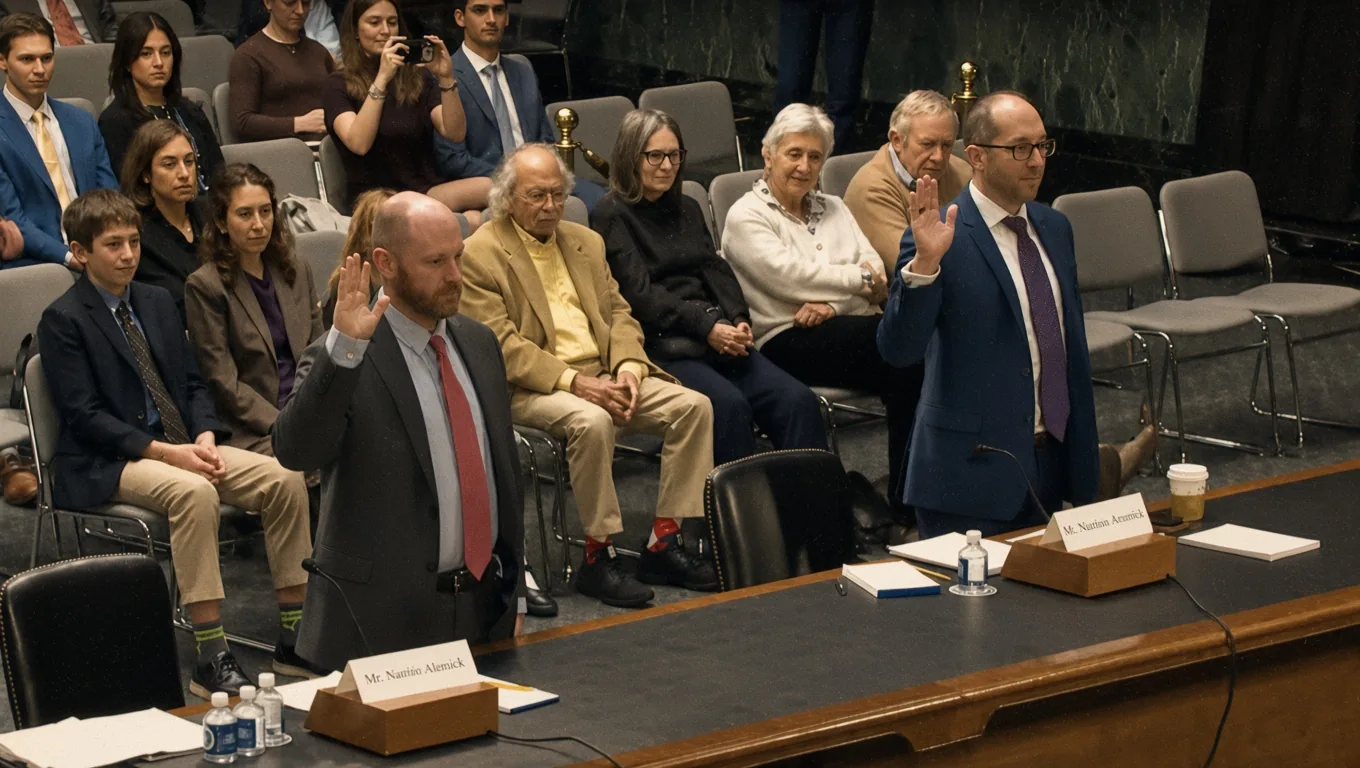
- The hearing
- Tuesday 17 November 2026, 3:00pm, room 106, Dirksen Senate Office Building. The committee page names Nathan Anonick of Virginia and Matthew Rowland of the District of Columbia.
- The nominations
- Sent on 12 November 2026. Anonick, a term expiring 19 June 2031, vice Rostin Behnam, term expired, PN1489-1-119. Rowland, the remainder of a term expiring 13 April 2028, vice Summer K. Mersinger, PN1489-4-119. Last action on each: hearings held.
- The statements
- Anonick's written statement does not mention event contracts, sports, or gambling. Rowland's names explosive growth in event contracts, crypto derivatives, and security futures, and an open door to states and tribes.
- The questioning
- CDC Gaming and iGaming Business report that neither man called a sports-event contract a bet. Both, on those accounts, said a Supreme Court ruling would bind them. The committee did not vote. CDC reports that the record was left open for two business days.
- The commission
- The CFTC commissioner page lists only Chairman Michael S. Selig, sworn in on 22 December 2025. The page says the commission has five seats and that no more than three commissioners may be of the same party.
The Senate Agriculture Committee heard two nominees for the Commodity Futures Trading Commission on 17 November and did not vote on them. iGaming Business reported the session on 19 November. CDC Gaming reported it the day it was held. This desk opened the committee’s hearing page, the written statements posted there, the White House notice of 12 November, Chairman John Boozman’s opening statement as prepared for delivery, the committee’s nominations list, and the commission page that names the sitting commissioners. It has not opened a transcript or a recording, so the oral answers below are the two outlets’ accounts.
The hearing page puts the session at 3:00pm in room 106 of the Dirksen Senate Office Building. The nominees are Nathan Anonick, of Virginia, and Matthew Rowland, of the District of Columbia. The White House sent both names on 12 November. Anonick is named for a term expiring 19 June 2031, the seat of Rostin Behnam, whose term has expired. Rowland is named for the remainder of a term expiring 13 April 2028, the seat of Summer K. Mersinger. The committee’s list numbers them PN1489-1-119 and PN1489-4-119, both received on 12 November. The last action on each is that the committee held hearings.
The commission’s own page lists one person, Chairman Michael S. Selig, sworn in on 22 December 2025. The page says the body has five commissioners, appointed with the Senate’s consent to staggered five-year terms, and that no more than three may be of the same party at once. iGaming Business describes Anonick as the Republican nominee and Rowland as the Democrat, and says that confirmation of both would still leave two seats, at least one of them Democratic. The written statements do not print a party label. Anonick writes that he has served Boozman, first in the personal office and then on this committee, for over four years, and he thanks Chairman Selig for supporting the nomination. Rowland writes that he has been a commission attorney for more than 11 years, in the Division of Enforcement, in the Office of the General Counsel, and as senior counsel to Commissioner Kristin Johnson. For the past three years, he writes, the agency has detailed him to the committee’s Democratic staff. He thanks Minority Leader Schumer for recommending him. He also writes that he and Anonick have been counterparts across the aisle for almost three years.
Anonick’s statement does not mention event contracts, sports, or gambling. It stays with agricultural and energy derivatives, with what he calls frontier markets opened by technology, and with a principles-based rulebook he says can keep pace. Boozman’s prepared opening does name the product. He says financial products have become more retail facing, and that participation has risen in event contracts and in digital assets. He says the commission works best with a full slate, and that the hearing is a step toward advancing the nominations.
Rowland’s statement is the one that meets the market the senators then asked about. Beside agriculture, energy, and economic indicators, he writes, there is explosive growth in new markets for event contracts, crypto derivatives, and security futures, and retail customers increasingly drive that growth. He says that calls for another look at customer-protection rules, while the core principles stay. He commits to an open door for stakeholders that include states and tribes. He writes that he knows of significant staff attrition and disruption in 2025, and that he wants the enforcement programme back at its historical size and level of activity. He does not say whether a sports contract is a swap, or a bet.
What the nominees said aloud is the outlets’ account of the questioning. CDC reports that Senator Adam Schiff asked both men a question he had put to Selig: whether a sports-event contract on a Thursday night National Football League game, which that report names as the Indianapolis Colts against the Houston Texans, is the same as a sports bet. Anonick, in that account, called the question complex because federal courts have disagreed, and said he appreciated the practical argument and that it is legally complex. iGaming Business reports that he called the split among the circuits complex and confusing, and that he promised to follow court rulings through what it quotes as a robust, thorough fact-finding process.
CDC reports that Senator Tina Smith asked whether the Supreme Court’s 2018 decision overturning the Professional and Amateur Sports Protection Act returned sports betting to the states. Rowland’s answer, in that report, was that this was his understanding of what the court said. Anonick said he was not an expert on that case, but believed so. Both, CDC reports, said it was their understanding that the Indian Gaming Regulatory Act regulates gaming by tribes. Smith, in the same account, said that if it walks like a bet and quacks like a bet, it is a bet, and that a prohibition on gaming applies to these event contracts. CDC reports that Rowland said he knew that is how Regulation 40.11 is written, and that Anonick said his understanding of the Commodity Exchange Act is that the commission may find a contract against the public interest when it meets the listed factors, one of which is gaming.
On the open rulemaking, CDC quotes Rowland as saying that the special rule directs the agency to think about the public interest, that the commission under Chairman Selig has a rulemaking underway, and that the agency should think long and hard about balancing the public interest against the economic usefulness of these contracts. iGaming Business quotes the same balancing point and reports that he hopes to take part in that rulemaking if confirmed. Both report that he expects a Supreme Court decision on prediction markets in the next term or the one after, and that the commission would be bound by it. iGaming Business quotes him: there is likely to be such a decision sometime within the next term or the one after, and the commission would be bound by the court’s decision. CDC also reports that he said it was hard to comment on litigation the commission is in, and that he was sympathetic to the concerns states and tribes have raised.
CDC reports that Ranking Member Amy Klobuchar pressed the preemption question as well: the commission’s position that states are preempted from regulating sports-event contracts, and what duty the agency still has to test a contract against the gaming limit in the special rule. The committee’s pages and the written statements spell her name Klobuchar.
iGaming Business’s reading is that the two men neither adopted nor opposed the way the commission has treated prediction markets. CDC’s reading is that neither gave a clear answer on whether the federal agency or state gaming rules should govern sports-event contracts. Both say the committee took no vote. CDC reports that Boozman said the record would stay open for two business days. iGaming Business reports that he wants both nominees confirmed as soon as possible. His prepared text says he looks forward to advancing the nominations. It does not set the two business days.
Sources
- iGaming Business, 19 November 2026
- CDC Gaming, 17 November 2026
- Senate Committee on Agriculture, Nutrition, and Forestry, nomination hearing, 17 November 2026
- The White House, nominations sent to the Senate, 12 November 2026
- Opening statement of Nathan Anonick, 17 November 2026
- Statement of Matthew Rowland, 17 November 2026
- Chairman Boozman, opening statement as prepared, 17 November 2026
- Senate Committee on Agriculture, Nutrition, and Forestry, nominations list
- Commodity Futures Trading Commission, chairman and commissioners