Five percent of pupils spent their own money past the age line.
The screen's residual, 74.0 percent, is the rest of that own-money cut. A wider question, gambling even when the money was someone else's, still sits at 45 percent in the past year.
- The sample
- 3,867 pupils aged 11 to 17, curriculum years 7 to 12, and S1 to S6 in Scotland. Academies, maintained schools and independent schools in England, Scotland and Wales. Online questionnaires in class. Fieldwork 12 January to 12 June 2026. Ipsos, for the Gambling Commission. Published 12 November 2026. The 2025 base in the workbook is 3,666. The 2022 base is 2,559, and that year stops at 16.
- Own money
- Past 12 months, spent their own money: 31 percent in 2022, 26 percent in 2023, 27 percent in 2024, 30 percent in 2025, 26 percent in 2026. Past four weeks: 18, 13, 14, 16 and 12 percent. Past seven days: 7, 5, 6, 6 and 5 percent. The workbook says a comparison with 2022 is indicative only, because 17-year-olds and independent schools joined in 2023.
- The age line
- 2026 only. The new labels are not comparable with earlier waves. Age-restricted, own money, past 12 months: 5 percent. Non-age-restricted: 24 percent. Added here, 24 and 5 are 29, three points over the 26 who spent money on any activity. Arcade machines 19 percent, down from 21. Bets with friends or family 11 percent, down from 14. Cards 5 percent, unchanged. Fruit or slot machines in an arcade, pub or club 3 percent, down from 4.
- The screen
- DSM-IV-MR-J, asked of pupils who spent their own money on any of 17 activities in the past 12 months. Printed 2026 shares: never gambled 74.0 percent, score 0 or 1 at 23.1 percent, score 2 or 3 at 2.0 percent, score 4 or more at 0.9 percent. Those four printed figures add to 100.0. The 2025 score of 4 or more is 1.2 percent. The report calls the change not significant. The workbook says both higher bands sit under 50 cases.
- The wider cut
- Experience of gambling in the past 12 months, own money or not: 50 percent in 2022, 40 percent in 2023, 44 percent in 2024, 49 percent in 2025, 45 percent in 2026. The trends section says the share who had ever gambled fell from 60 percent in 2022 to 55 percent in 2026. The headlines page states the 2026 ever-figure as 55 percent.
The Gambling Commission published its 2026 survey of pupils and gambling on 12 November. SBC News reported it the next day. The counts below are from the Commission pages and the workbook issued with them, which this desk opened. Ipsos ran the fieldwork. Pupils filled in an online questionnaire in class between 12 January and 12 June 2026.
The sample is 3,867 pupils aged 11 to 17, in curriculum years 7 to 12, and in S1 to S6 in Scotland. The schools are academies, maintained schools and independent schools in England, Scotland and Wales. Answers are what the pupils said. The Commission’s news release says they are estimates of reported experience, and that they are not an independent check of what the pupils did. The workbook says the figures are weighted, and that the bases printed beside them are the unweighted number of pupils who answered.
The question the Commission treats as active involvement is whether a pupil spent their own money. Own money means pocket money, birthday money, or money the pupil earned. In the past 12 months, 26 percent had done that. The same line is 30 percent in 2025, 27 percent in 2024, 26 percent in 2023 and 31 percent in 2022. From 31 percent to 26 percent is five points. Divided here, five over 31 is 16.1 percent. The report calls the move from 30 percent in 2025 to 26 percent in 2026 a significant decrease. A comparison with 2022 is indicative only. The workbook says 17-year-olds and independent schools entered the sample in 2023, and the 2022 base is 2,559 pupils aged 11 to 16. The later bases in the same table are 3,453, 3,869, 3,666 and 3,867.
The shorter windows moved as well. Pupils who had spent their own money in the past four weeks were 18 percent in 2022, 13 percent in 2023, 14 percent in 2024, 16 percent in 2025 and 12 percent in 2026. The trends section states the 18-to-12 fall and calls it significant. Six points over 18 is one third, 33.3 percent, which the report does not print. The past seven days sit at 7, 5, 6, 6 and 5 percent. The trends section says that window stayed comparatively low across the five years.
The 2026 tables split that spending into age-restricted and non-age-restricted gambling, and the workbook says those two labels are new. They replace “regulated” and “unregulated”, and the age-line data are not comparable with earlier waves. Age-restricted, in the workbook’s definition, is activity the Commission licenses and builds so that someone under 18 cannot take part: betting or casino play with a licensed operator, online or in premises, National Lottery and other lottery products, and gaming machines in a betting shop. Non-age-restricted covers private gambling with friends or family, and machines a child may legally use. Bingo away from a bingo club is mostly in that second group, except where it is played for money, which the note says makes it age-restricted.
On the new labels, 5 percent spent their own money on an age-restricted activity in the past 12 months, and 24 percent spent it on a non-age-restricted one. Added here, 24 and 5 are 29, three points above the 26 percent who spent money on any activity. That three-point gap is the overlap, on this paper’s subtraction, if every pupil who spent money sits in at least one of the two groups. The report says the activity list is a multiple-response question, so the lines are not meant to add to 100.
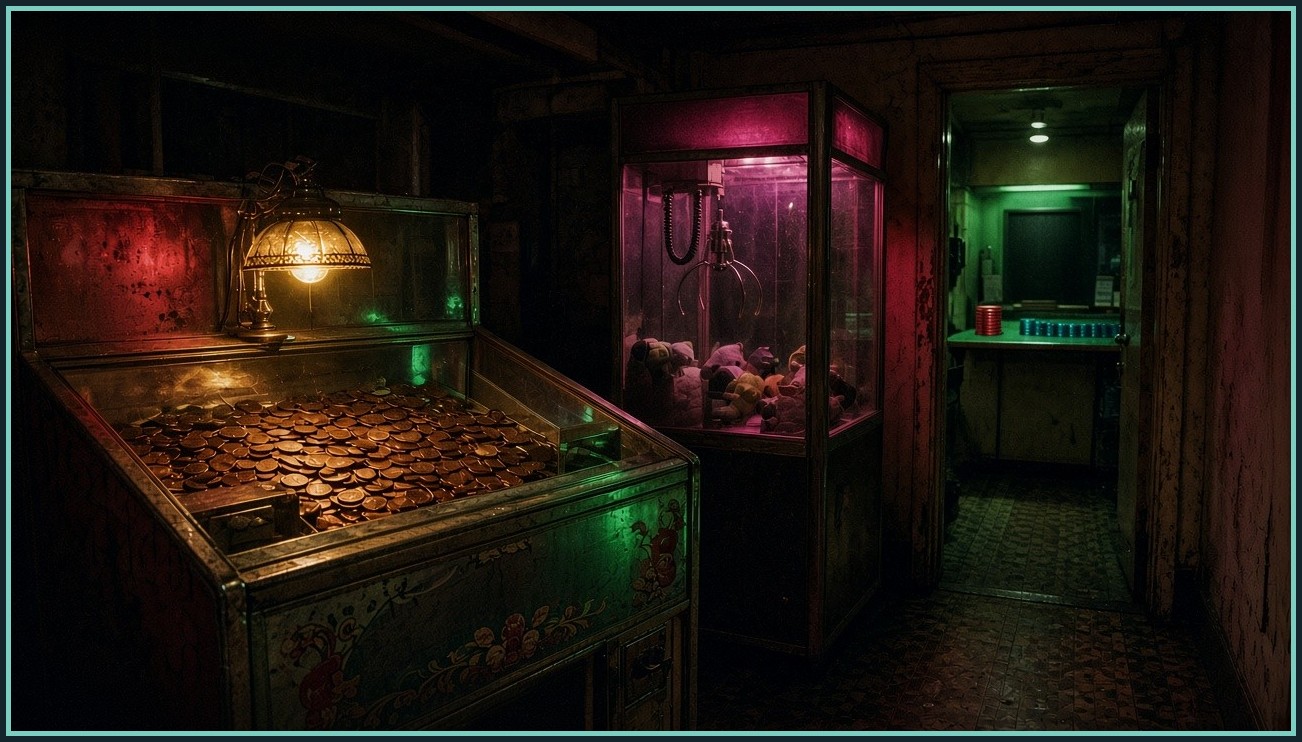
The activities that carry the 26 percent are the ones a pupil can do without a bookmaker. Arcade machines, penny pushers and claw grabs, are 19 percent, down from 21 percent in 2025. A bet for money with friends or family is 11 percent, down from 14 percent. Cards for money are 5 percent in both years, and the report marks that as no significant difference. The report says the fall from 30 percent to 26 percent was driven by the arcade line and the private-bet line. Fruit or slot machines in an arcade, a pub or a social club print at 4 percent in 2025 and 3 percent in 2026. The report’s comparison table marks a fall from 4 percent to 3 percent as significant, and in the workbook that pair of rates belongs to this line.
The licensed products sit at 1 percent each, on the workbook’s rounding: a National Lottery draw, a paid National Lottery scratchcard, a bet in a betting shop, a bet on a website or app, an online casino game, and an esports bet placed online. Online instant-win games and other lotteries print as an asterisk, which the workbook defines as above zero and under 0.5 percent. A real-life casino game prints at 1 percent in 2026 and as an asterisk in 2025. Gambling machines inside a betting shop are an asterisk in both years.
Boys and girls are close on the headline. The report says 26 percent of boys and 25 percent of girls spent their own money, and that the difference is not significant. Pupils aged 14 to 17 are at 29 percent, and pupils aged 11 to 13 are at 22 percent. The workbook’s unrounded figure for the older band is 0.29. The report ties the age gap to arcade machines, private bets and cards.
The youth screen is the DSM-IV-MR-J. The workbook says it is asked only of pupils who spent their own money on at least one of 17 activities in the past 12 months, including arcade machines and private bets, and that a pupil who skipped the questions or chose “prefer not to say” drops out of the base. It is a self-reported screen, not a clinical diagnosis, and the Commission says it is not comparable with an adult problem-gambling screen. A score of 4 or more, out of nine components, is the band the report calls problem gambling. A score of 2 or 3 is at risk. A score of 0 or 1 is a pupil who gambled on this definition and is not classed as having problems.
The report prints the 2026 shares as 74.0 percent who had never gambled, 23.1 percent at 0 or 1, 2.0 percent at 2 or 3, and 0.9 percent at 4 or more. Added here, those four printed figures are 100.0. The three bands of pupils who did spend their own money are 26.0, the same 26 percent as the participation line. The workbook’s unrounded 2026 cells are 0.74, 0.2308, 0.0196 and 0.0085, which add to 0.9989. The 0.9 percent is 0.85 percent before the report rounds it. In 2025 the score of 4 or more is 1.2 percent, and the report’s “never gambled” share is 69.6 percent. The report says the change in the two higher bands is not significant, and that the score of 4 or more has stayed broadly level since 2022. The workbook says both higher bands are under the study’s threshold of 50 cases, so the intervals are wide and any split by age or sex is indicative only. This paper does not turn 0.9 percent of a weighted sample into a headcount.
The news release uses the same 0.9 percent and 1.2 percent, and it describes them as pupils who reported harm such as missing school, lying, or spending dinner money. That description is the release’s gloss on the screen. The footnote on the release says the classification is the screen, and that treating it as a measure of addiction would misuse the data. Ben Haden, director of research and statistics, said the Commission’s concern is that children should not be able to spend money on age-restricted products, and that the survey is one view of that question.
A second question counts experience of gambling whether or not the pupil spent their own money. In the past 12 months that share is 45 percent in 2026, against 49 percent in 2025, 44 percent in 2024, 40 percent in 2023 and 50 percent in 2022. The headlines page says 55 percent have some experience of gambling, and 45 percent have had that experience in the past 12 months. The trends section says the share who had ever gambled fell from 60 percent in 2022 to 55 percent in 2026. The 74.0 percent on the screen is the complement of spending one’s own money in the past year. It is a different cut from the 55 percent who have ever had some experience of gambling, and from the 45 percent who had that experience in the past year.
Sources
- SBC News, 13 November 2026
- Gambling Commission, news release, 12 November 2026
- Gambling Commission, Young People and Gambling 2026, official statistics
- Gambling Commission, headlines
- Gambling Commission, active involvement
- Gambling Commission, trends summary, 2022 to 2026
- Gambling Commission, Young People and Gambling 2026 data tables